Brainy Quote of the Day

Showing posts with label Computing. Show all posts

Tuesday, August 28, 2018

Hobbits, Bots and Vaxxers...

Russian agents exploit anti-vax messaging to stir up discord.
PETER DAZELEY/GETTY IMAGES
Topics: Civics, Civil Rights, Computer Science, Computing, Human Rights, Internet, Politics

From Friday's post: “Putin’s thesis is that the American constitution is an experiment that will fail if it is challenged in the right way from within,” Mitchell continued. “Putin wants to break apart the American republic not by influencing an election or two, but by systematically inflaming the fault lines within our society. Accepting this fact is absolutely essential for developing a long-term response to the problem.”


Russian online users known as trolls are taking to social media to sow public conflict about vaccination, according to a new study published in the American Journal of Public Health.

In what sounds like a hybrid story joining Star Trek and The Hobbit, US researchers from George Washington University, the University of Maryland and Johns Hopkins University found that bots, trolls, cyborgs, content polluters and other actors stimulate distrust in the efficacy of vaccination to prevent diseases.

Many of these actors spread false or misleading information, but sources identified as Russian in origin produce messages that argue on both sides of the discussion, with the aim, the researchers suggest, of “promoting discord”.

“Accounts masquerading as legitimate users create false equivalency, eroding public consensus on vaccination,” the report finds.

“These trolls seem to be using vaccination as a wedge issue, promoting discord in American society,” says Mark Dredze, one of the authors of the study.

If you are among the few that don't think our elections were compromised in a directed assault, this is more personal. Vaccinations impact what the CDC refers to as herd immunity. That has helped to eliminate diseases - mostly to children - that used to prove fatal to them.

This is Russia literally trying...to kill us.

Research finds Russian trolls, bots, stoke US vaxxer conflict, Jeff Glorfeld, Cosmos Magazine

Thursday, January 8, 2015

HDI...

Figure 1. Human-Data Interaction. Our personal data feeds black-box analytics algorithms. These output inferences driving actions whose effects may or may not be visible to us, and which may include changes in our behaviour and the data generated about and by us subsequently.
TECHNOLOGY REVIEW: The rapidly evolving ecosystems associated with personal data is creating an entirely new field of scientific study, say computer scientists. And this requires a much more powerful ethics-based infrastructure.

Back in 2013, the UK supermarket giant, Tesco, announced that it was installing face recognition software in 450 of its stores that would identify customers as male or female, guess their age and measure how long they looked at an ad displayed on a screen below the camera. Tesco would then give the data to advertisers to show them how well their advertising worked and allow them to target their ads more carefully.

Many commentators pointed out the similarity between this system and the sci-fi film Minority Report in which people are bombarded by personalised ads which detect who they are and where they are looking.

It also raised important questions about data collection and privacy. How would customers understand the potential uses of this kind of data, how would they agree to these uses and how could they control the data after it was collected?

Abstract
The increasing generation and collection of personal data has created a complex ecosystem, often collaborative but sometimes combative, around companies and individuals engaging in the use of these data. We propose that the interactions between these agents warrants a new topic of study: Human-Data Interaction (HDI). In this paper we discuss how HDI sits at the intersection of various disciplines, including computer science, statistics, sociology, psychology and behavioural economics. We expose the challenges that HDI raises, organised into three core themes of legibility, agency and negotiability, and we present the HDI agenda to open up a dialogue amongst interested parties in the personal and big data ecosystems.

Physics arXiv: Human-Data Interaction: The Human Face of the Data-Driven Society
Richard Mortier, Hamed Haddadi, Tristan Henderson, Derek McAuley, Jon Crowcroft

Tuesday, September 30, 2014

Quantum Data Compression...

Artistic impression of quantum information. (Courtesy: iStockphoto/tusumaru)

A quantum analogue of data compression has been demonstrated for the first time in the lab. Physicists working in Canada and Japan have squeezed quantum information contained in three quantum bits (qubits) into two qubits. The technique could pave the way for a more effective use of quantum memories and offers a new method of testing quantum logic devices.


Compression of classical data is a simple procedure that allows a string of information to take up less space in a computer's memory. Given an unadulterated string of, for example, 1000 binary values, a computer could simply record the frequency of the 1s and 0s, which might require just a dozen or so binary values. Recording the information about the order of those 1s and 0s would require a slightly longer string, but it would probably still be shorter than the original sequence.


Quantum data are rather different, and it is not possible to simply determine the frequencies of 1s and 0s in a string of quantum information. The problem comes down to the peculiar nature of qubits, which, unlike classical bits, can be a 1, a 0 or some "superposition" of both values. A user can indeed perform a measurement to record the "one-ness" of a qubit, but such a measurement would destroy any information about that qubit's "zero-ness". What is more, if a user then measures a second qubit prepared in an identical way, he or she might find a different value for its "one-ness" – because qubits do not specify unique values but only the probability of measurement outcomes. This latter trait would seem to preclude the possibility of compressing even identical qubits, because there is no way of predicting what classical values they will ultimately manifest as.


Note: I know that was difficult to follow, but don't go all "new age" here. Although I've noticed the popularity of relating quantum physics to metaphysics, the two are mutually exclusive - quantum only applies to phenomena going at or approaching the speed of light. Ahem: we humans are rather slow in comparison.

Physics World: Quantum data are compressed for the first time
Jon Cartwright, Bristol, UK

Friday, July 18, 2014

Bertrand Corollary...

Source: Technology Review
TECHNOLOGY REVIEW: It turns out that if a crowd offers a wide range of independent estimates, then it is more likely to be wise. But if members of the crowd are influenced in the same way, for example by each other or by some external factor, then they tend to converge on a biased estimate. In this case, the crowd is likely to be stupid.

Today, Gabriel Madirolas and Gonzalo De Polavieja at the Cajal Institute in Madrid, Spain, say they found a way to analyse the answers from a crowd which allows them to remove this kind of bias and so settle on a wiser answer.

The theory behind their work is straightforward. Their idea is that some people are more strongly influenced by additional information than others who are confident in their own opinion. So identifying these more strongly influenced people and separating them from the independent thinkers creates two different groups. The group of independent thinkers is then more likely to give a wise estimate. Or put another way, ignore the wisdom of the crowd in favour of the wisdom of the confident.

However...

"The whole problem with the world is that fools and fanatics are always so certain of themselves, and wiser people so full of doubts." Bertrand Russell

Physics arXiv:
Wisdom of the Confident: Using Social Interactions to Eliminate the Bias in the Wisdom of the Crowds

Thursday, July 3, 2014

Modeling Stars in 3-D...

Volume rendering of the entropy of a differentially rotating and highly magnetized progenitor to a supernova in a full 3-D. Red colors indicate high entropy (hot) material while blue represents low entropy (cold) material. Strongly magnetized material is continuously launched from the surface of the proto-neutron star in the center but gets severely distorted such that, instead of a clean jet observed in the ultra-strong magnetic field case, two giant polar lobes are formed. The box size for the visualization is 2000km cubed.

Credit: Philipp Moesta, TAPIR, California Institute of Technology
[The following is Part eight in a series of stories that highlight recent discoveries enabled by the Stampede supercomputer. In parts one, two, three, four, five, six and seven, learn how the system is helping to advance research throughout science and engineering.]

Using the National Science Foundation-supported Stampede supercomputer, Philipp Moesta and Christian D. Ott from the California Institute of Technology succeeded in performing the first 3-D simulations of a collapsing star that takes into account the influence of general relativity and magnetohydrodynamics--the interplay of electrically conducting fluids like plasmas and powerful magnetic fields. The death of these collapsing stars leads to energetic, jet-driven supernova explosions.

Their findings show that the simulations behave very differently in full, unconstrained 3-D compared to the same model simulated with the assumption that stars are sperically symmetrical.

National Science Foundation: Everything is Better in 3-D

Wednesday, February 20, 2013

Braess’ Paradox...


TECHNOLOGY REVIEW: One of the increasingly famous paradoxes in science is named after the German mathematician Dietrich Braess who noted that adding extra roads to a network can lead to greater congestion. Similarly, removing roads can improve travel times.


Traffic planners have recorded many examples of Braess’ paradox in cities such as Seoul, Stuttgart, New York and London. And in recent years, physicists have begun to study how it might be applied in other areas too, such as power transmission, sporting performance where the removal of one player can sometimes improve a team’s performance and materials science where the network of forces within a material can be modified in counterintuitive ways, to make it expand under compression, for example.

Today, Krzysztof Apt at the University of Amsterdam in The Netherlands and a couple of pals reveal an entirely new version of this paradox that occurs in social networks in which people choose products based on the decisions made by their friends. 

They show mathematically that adding extra products can reduce the outcome for everyone and that reducing product choice can lead to better outcomes for all. That’s a formal equivalent to Braess’ paradox for consumers.


1. Physics arXiv: Paradoxes in Social Networks With Multiple Products
2. Harvard: Virtual Cell Program

Tuesday, October 16, 2012

Cyber Road Dog...

While it takes just a few keystrokes and mouse clicks to post a tweet on Twitter or "friend" someone on Facebook, it may require thousands of lines of code to accomplish the task.


Dog, a new programming language, could make it easier and more intuitive to write all sorts of social applications—anything from peer-to-peer question-and-answer sites to online dating. And because Dog incorporates natural language, this may make it easier for newbies to learn to code, too.


MIT Media Lab professor Sep Kamvar, who developed Dog with the help of some graduate students, hopes to release the language in a private beta version in the next few months, and offer a public release of it in the spring.

Technology Review: New Programming Language Makes Social Coding Easier

Thursday, April 12, 2012

Matter, Antimatter, Supercomputing...

Brookhaven National Laboratory
UPTON, NY — An international collaboration of scientists has reported a landmark calculation of the decay process of a kaon into two pions, using breakthrough techniques on some of the world’s fastest supercomputers. This is the same subatomic particle decay explored in a 1964 Nobel Prize-winning experiment performed at the U.S. Department of Energy’s Brookhaven National Laboratory (BNL), which revealed the first experimental evidence of charge-parity (CP) violation — a lack of symmetry between particles and their corresponding antiparticles that may hold the answer to the question “Why are we made of matter and not antimatter?”

The new research — reported online in Physical Review Letters March 30, 2012 — helps nail down the exact process of kaon decay, and is also inspiring the development of a new generation of supercomputers that will allow the next step in this research.

BNL: Supercomputing the Difference between Matter and Antimatter

Thursday, November 24, 2011

"Water" Army...

Physics arXiv
TECHNOLOGY REVIEW: "In China, paid posters are known as the Internet Water Army because they are ready and willing to 'flood' the internet for whoever is willing to pay. The flood can consist of comments, gossip and information (or disinformation) and there seems to be plenty of demand for this army's services.

"This is an insidious tide. Positive recommendations can make a huge difference to a product's sales but can equally drive a competitor out of the market. When companies spend millions launching new goods and services, it's easy to understand why they might want to use every tool at their disposal to achieve success.

"The loser in all this is the consumer who is conned into making a purchase decision based on false premises. And for the moment, consumers have little legal redress or even ways to spot the practice.

"Today, Cheng Chen at the University of Victoria in Canada and a few pals describe how Cheng worked undercover as a paid poster on Chinese websites to understand how the Internet Water Army works. He and his friends then used what he learnt to create software that can spot paid posters automatically."

Call it what it is: espionage on a whole new level.

"It is only the enlightened ruler and the wise general who will use the highest intelligence of the army for the purposes of spying, and thereby they achieve great results."

"Secret operations are essential in war; upon them the army relies to make its every move."

"All warfare is based on deception."

Sun Tzu, "The Art of War"

Sunday, October 30, 2011

Watson's Grandfather...

LA Times: John McCarthy, 1966 pioneer of A.I.

LA TIMES Science: "In the mid-1950s mathematician John McCarthy issued a call for research on "Automata Studies," but the phrase was so bland that few people understood what he meant. So he came up with a more provocative description of the idea he was promoting.

"He called it artificial intelligence.


"McCarthy, who died at his home in Stanford on Monday at 84, became known as the father of artificial intelligence for his seminal role in defining the field devoted to the development of intelligent machines."

This is a remarkable story. It shows the strength of character of a single-minded person, and the power of education. He also created Lisp, the basis of robotics programming, Internet applications and computer chess programs. In essence (my opinion only), he was the grandfather of Watson.


1. Los Angeles Times: John McCarthy dies at 84; the father of artificial intelligence
2. Lisp.org: John McCarthy
3. Wikipedia: Lisp Programming Language


Monday, October 3, 2011

A Big Post on Small Things...


National Institute of Standard and Technology

Here's the Table of Contents. The embed is below it (authors included in the PDF). Pick the topic you have research interest in, or just curiousity...


Preface IX
Part 1 Semiconductor Nanowires 1
Chapter 1 Surface Optical Mode in Semiconductor Nanowires 3
Chapter 2 Large-Scale Synthesis of Semiconductor Nanowires by Thermal Plasma 27
Chapter 3 Template-Assisted Electrochemical Synthesis of Semiconductor Nanowires 41
Chapter 4 Semiconducting Oxide Nanowires: Growth, Doping and Device Applications 59 Part 2 Oxide Nanowires 99
Chapter 5 Application of the Kirkendall Effect to Morphology Control of Nanowires: Morphology Change from Metal Nanowires to Oxide Nanotubes 101
Chapter 6 Formation of Oxide Nanowires by Thermal Evaporation and Their Application to Gas Sensors 117
Chapter 7 Electrodeposited Copper Oxide and Zinc Oxide Core-Shell Nanowire Photovoltaic Cells 141
Chapter 8 ZnO Nanowires and Their Application for Solar Cells 157 Part 3 Nanowire Devices 179
Chapter 9 Ultrafast Photoluminescence in Nanowires 181
Chapter 10 Numerical Simulation of Transient Response in 3-D Multi-Channel Nanowire MOSFETs Submitted to Heavy Ion Irradiation 201
Chapter 11 Co/Cu Nanowire Systems for GMR Sensing Applications 223
Chapter 12 Surface-Directed Growth of Nanowires: A Scalable Platform for Nanodevice Fabrication 245
Chapter 13 Organic Surface Modification of Silicon Nanowire-Based Sensor Devices 267
Chapter 14 Characterization and Application of Thermoelectric Nanowires 289
Chapter 15 Silicon-Based Nanowire MOSFETs: From Process and Device Physics to Simulation and Modeling 317 Part 4 Nanowire Fabrication 355
Chapter 16 Obtaining Nanowires under Conditions of Electrodischarge Treatment 357
Chapter 17 The Selective Growth of Silicon Nanowires and Their Optical Activation 375
Chapter 18 Nano-Scale Measurements of Dopants in Individual Silicon Nanowires Using Kelvin Probe Force Microscopy 417
Chapter 19 Fabrication of Conducting Polymer Nanowires 439
Chapter 20 Fabrication and Characterization of Copper Nanowires 455
Chapter 21 Laser Interference Lithography for Fabricating Nanowires and Nanoribbons 471 Part 5 Nanowire Characterization 485
Chapter 22 Growth and Characterisation of Ge Nanowires by Chemical Vapour Deposition 487 Chapter 23 Niobates Nanowires: Synthesis, Characterization and Applications 509


Intech (as the site states) is an open access publisher: FREE download!

Friday, August 12, 2011

Community Computing Power...

ScienceBlogsdotcom
It appears the Large Hadron Collider is using a similar protocol as Einstein at home, right down to the software needed to install on your computer/laptop.

I noticed my embed wasn't displaying this morning, and quite naturally got concerned. The issues reported will probably be resolved soon (hope we didn't contribute to it):

Problem with job supply from CERN

WE HAVE A PROBLEM. WE BELIEVE SOME "ROGUE" SYSTEMS ARE SUCKING OUR QUEUES DRY AND THUS OVERLOADING THE SUPPLY OF JOBS TO EVERYONE ELSE.

Please be patient - we will try and fix this as soon as possible.

Until this problem is understood, we have disabled the creation of new jobs and users for the moment. As soon as the system is recovered, the work units flow will be restored.

LHC@home 2.0 team

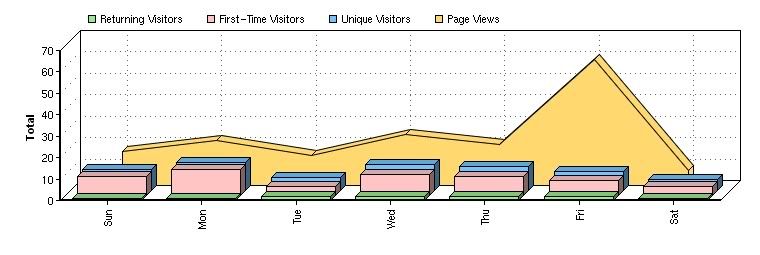
Number of page views Friday, 12 August 2011

Map of global hits Friday, 12 August 2011

Ehh...ahem: "my bad?"

Posted 11 August 2011 21.00


Wednesday, August 3, 2011

A Truly "Smart Phone" Idea...

The Dark Knight
I humorously hear commercials of smart phones either doing electrolysis, or sawing turkeys. All to advertise the app of channeling your favorite radio station on your device.

Almost like a real-life example of Gotham "bat sonar," scientists use/want to use cell phones:

- to image malaria-infected blood;
- app to measure a spacecraft's position, altitude, earth's curvature;
- a wireless monitor of heart health.

Related links:
M-Science: Sensing, Computing and Dissemination
Scitation AIP: Harnessing consumer mobile devices for science

Monday, June 13, 2011

Innovation Lauded in Poughkeepsie...

Image Credit (London office): Answersdotcom

"It all started in New York in 1911 when the Computing-Tabulating-Recording Company (CTR) was created by a merger of The Tabulating Machine Company (Hollerith's punch card company in Washington, DC), International Time Recording Company (time clock maker in NY state), Computing Scale Company (maker of scales and food slicers in Dayton, Ohio), and Bundy Manufacturing (time clock maker in Auburn, NY). CTR started out with 1,200 employees and a capital value of $17.5 million.

"In 1914, Thomas J. Watson, Sr., became general manager. During the next 10 years, he dispensed with all non-tabulating business and turned it into an international enterprise renamed IBM in 1924."


IBM R&D Spending

2010 $6 billion
2009 $5.82 billion
2008 $6.33 billion

IBM U.S. Patents

2010 5,896
2009 4,914
2008 3,125

Recent patents include

• A method for gathering, analyzing, and processing patient information from multiple data sources to provide more effective diagnoses of medical conditions
• A system for predicting traffic conditions based on information exchanged over short-range wireless communications
• A technique that analyzes data from sensors in computer hard drives to enable faster emergency response in the event of earthquakes and other disasters
• A technology advancement for enabling computer chips to communicate using pulses of light instead of electrical signals, which can deliver increased performance of computing systems.

Source: IBM and Journal archive

Poughkeepsie Journal: IBM spends $6 billion to keep industry lead

Sunday, May 15, 2011

Exact Eigenstate Analysis: Graphene Paper...


"Eigen" is a German/Dutch word meaning "inherent."

From Wikipedia: "Eigenvalues are often introduced in the context of linear algebra or matrix theory. Historically, however, they arose in the study of quadratic forms and differential equations.

"Euler studied the rotational motion of a rigid body and discovered the importance of the principal axes. Lagrange realized that the principal axes are the eigenvectors of the inertia matrix. In the early 19th century, Cauchy saw how their work could be used to classify the quadric surfaces, and generalized it to arbitrary dimensions. Cauchy also coined the term racine caractéristique (characteristic root) for what is now called eigenvalue; his term survives in characteristic equation."

Graphene research was the subject of the 2010 Nobel Prize.

This is a recent paper on the electrical properties of Graphene that will hopefully lead to further advancements in electronics.

The authors are Rajyavardhan Ray and Avinash Singh, Indian Institute of Technology, Kanpur, India:
Graphine_Eigenstates_1105.2354v1

Monday, May 9, 2011

3D versus 2D...

...no, not him:

...but, dare I say just as "impactful"?

Image Credit: Nature

Most transistors are 2D, or what makes up a transistor: source, drain and gate (that channels current when the right voltage is applied) all lie flat in the same plane. Intel's 3D uses the portruding "fin" resulting in three sides contacting the overlapping gate: Tri-Gate.

The concept was first introduced as the "FinFET" design by Dr. Chenming Hu and his colleagues at the University of California, Berkeley in the 90s. TSMC and Samsung are working on their own FinFET/Tri-Gate designs.

Currently, Polysilicon gates are in the range of 22 - 35 nanometers (10 to the minus 9 meters, or 0.000000001 meters). This will drive the technology to 14 nanometers or smaller and transistor speeds should be 37% faster.

The smaller we get, the more defectivity (I was a once a product/yield enhancement engineer) plays into manufacturing as well as quality concerns: the slightest amount of dirt will short out circuits the size of atoms. The smaller we go, quantum effects will come into play.

But that is the challenge... and the opportunity.

"Any intelligent fool can make things bigger and more complex... It takes a touch of genius - and a lot of courage to move in the opposite direction."

"It's not that I'm so smart, it's just that I stay with problems longer."

Both quotes by Albert Einstein